Track subscriptions and bills in finerd: confirm detected recurring payments, add your own, see what’s due or overdue and what each costs a year.
A recurring payment in finerd is a record of a subscription or bill you pay regularly, such as Netflix or rent: it keeps the amount, how often you pay and when the next payment is due, and finerd matches your payments to it. A recurring payment doesn’t create transactions. The payments still come from your bank or from the transactions you add, and the record shows which of them are paid, due or overdue.Recurring payments need Pro and work on the web, Android and iOS. Without Pro, Recurring shows a Pro badge and opens the subscription offer.Each recurring payment belongs to a merchant: finerd tracks the payments to that merchant in that currency. Open them here:
Web:Recurring in the sidebar. If you’ve hidden it, look under More.
Android and iOS:More → Recurring.
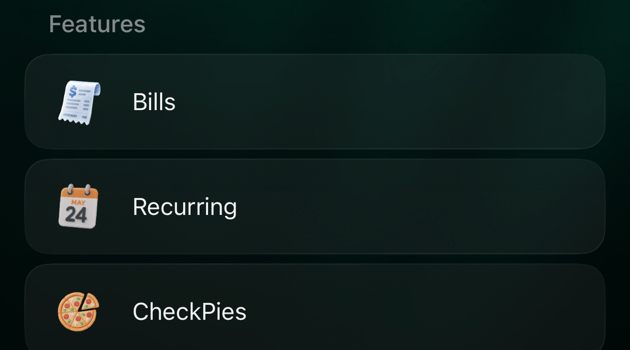
On iOS and Android, Recurring is under Features in More.
finerd looks for recurring payments in your expenses every night. It looks for payments that:
go to the same merchant, in the same currency;
have about the same amount each time (within about 5%);
repeat at a regular interval, from weekly to yearly;
happened at least three times (twice for a yearly payment), the last one recently.
Transfers, income and transactions without a merchant (Unknown merchant) aren’t checked. A payment finerd finds appears in Recurring with the Detected label, already linked to the payments it found. Confirm it or reject it: see Confirm or reject a detected payment.You don’t have to wait for the night. To check now:
Web
Android
iOS
Open Recurring.
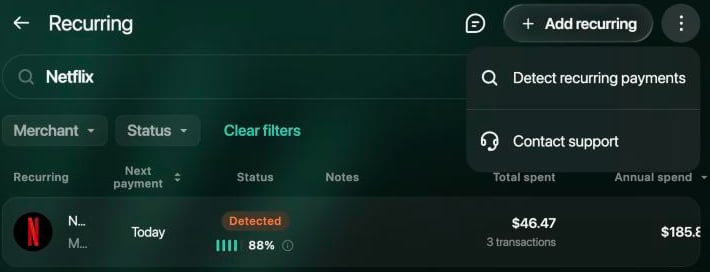
Select ⋮ in the top-right corner, then Detect recurring payments. If the list is empty, select Detect recurring payments in the middle of the page.
Wait a moment: the list updates when the check is done.
Detect recurring payments is in the page menu.
Next to the Detected label, bars and a percentage show how sure finerd is that the payment repeats.
Open More → Recurring.
If the list is empty, tap Detect recurring payments. When the check is done, the app shows Recurring detection finished.
The button appears only while you have no recurring payments. After that, finerd keeps checking every night.
Open More → Recurring.
If the list is empty, tap Detect recurring payments. When the check is done, the app shows Recurring detection finished.
The button appears only while you have no recurring payments. After that, finerd keeps checking every night.
A Detected payment is finerd’s suggestion. Decide what to do with it:
Confirm turns it into a recurring payment you track: the label changes to Confirmed and the linked payments stay.
Reject removes the suggestion: the label changes to Rejected and its payments are unlinked. finerd suggests it again only if the price changes.
A detected payment can’t be deleted: confirm or reject it first. The list shows Confirmed and Detected payments by default; to see rejected ones, choose Rejected in the Status filter.
Web
Android
iOS
In Recurring, select the detected payment.
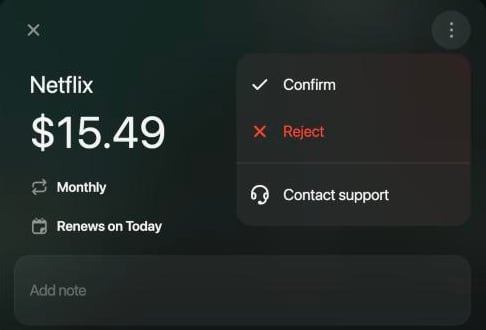
Select ⋮ in the top-right corner of the panel, then Confirm or Reject.
Confirm or reject a detected payment from its menu.
In Recurring, tap the payment with the Detected label.
Tap ⋮, then Confirm or Reject.
In Recurring, tap the payment with the Detected label.
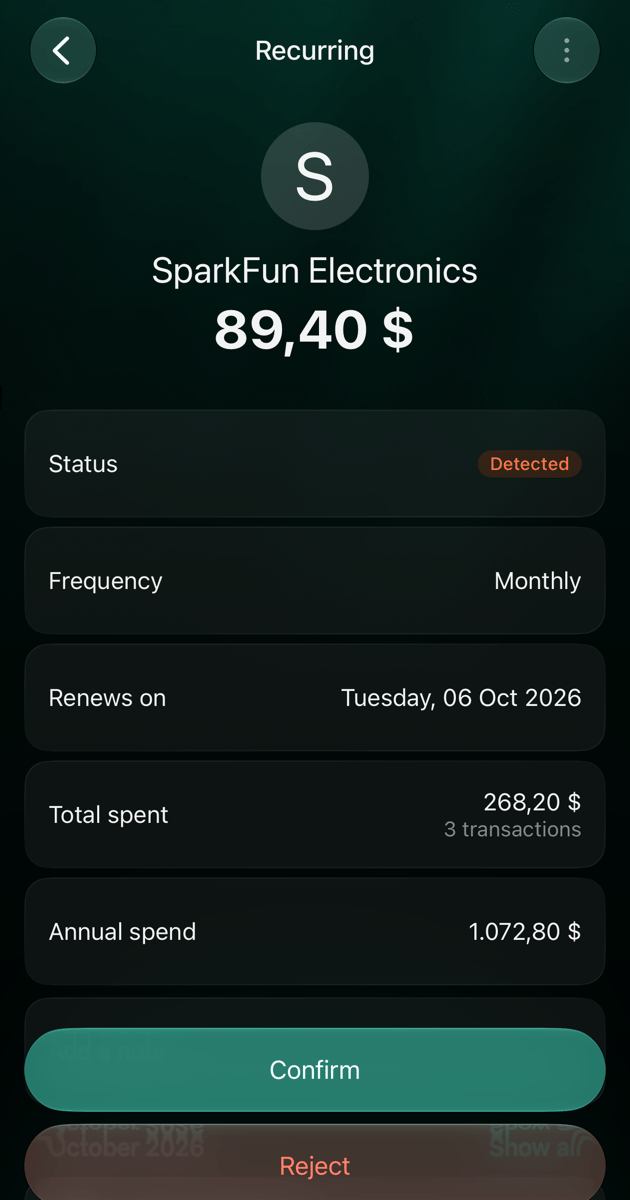
Tap Confirm or Reject at the bottom of the screen. The same actions are under ⋮.
A detected payment has Confirm and Reject buttons.
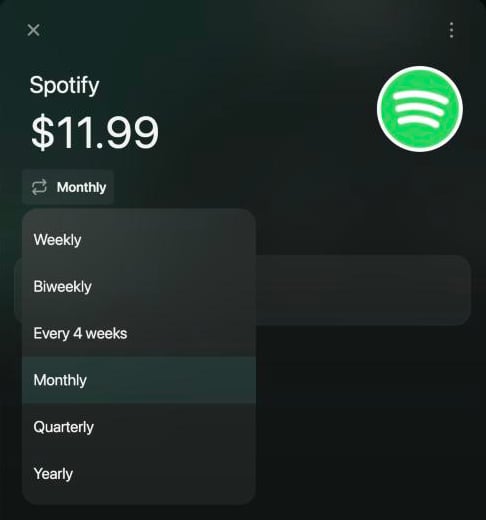
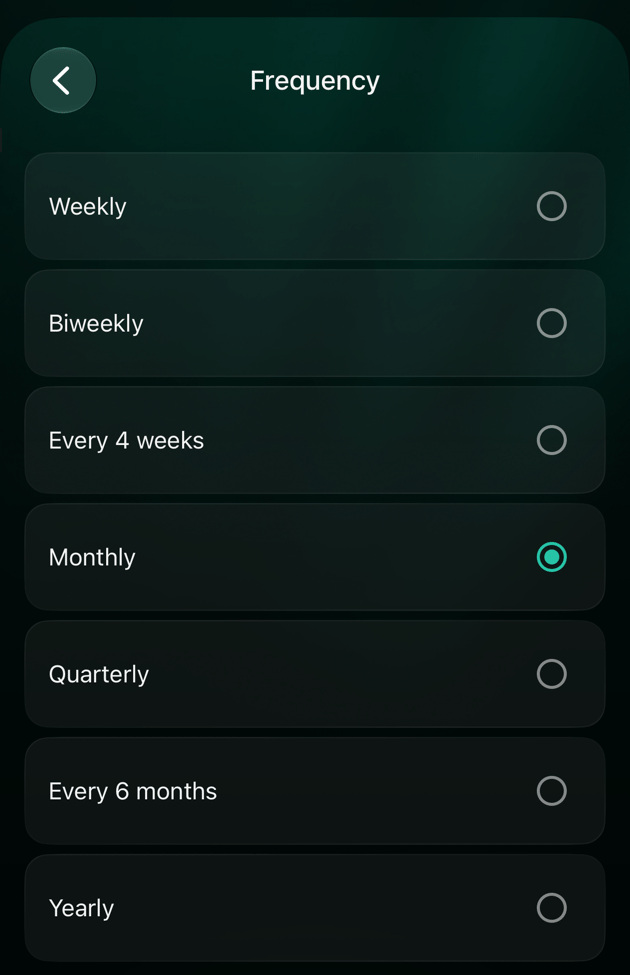
Add a payment finerd hasn’t found, for example a new subscription. You need its merchant, amount, how often you pay and the date of a payment. finerd expects a payment every period from that date. A payment you add is Confirmed straight away.The frequency can be Weekly, Biweekly, Every 4 weeks, Monthly, Quarterly or Yearly; iOS also offers Every 6 months. The amount starts in your primary currency, and you can choose another one before you save.
Web
Android
iOS
In Recurring, select Add recurring.
In Who’s charging you?, choose the merchant.
Select the amount, enter it and press Enter. To use another currency, choose it above the keypad.
Select Monthly to choose another frequency.
Select Next renewal and choose the date of a payment.
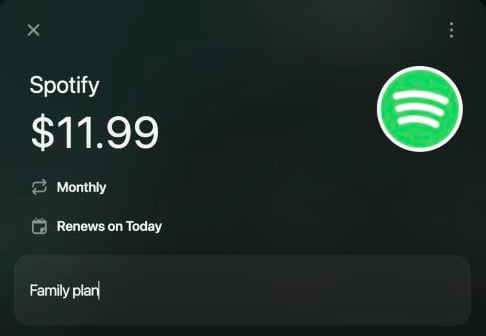
Optionally, add a note, such as the plan name.
Select Save.
Choose how often you pay.
A filled-in recurring payment.
In Recurring, tap +.
In Merchants, choose the merchant.
Enter the amount. To use another currency, choose it now: you can’t change it later.
Tap Monthly to choose another frequency.
Tap Renews on and choose the date of a payment. It starts at today.
Optionally, add a note.
Tap Save. It appears once the amount is above zero.
In Recurring, tap +.
In Who’s charging you?, choose the merchant.
On Add recurring, tap the amount, enter it and tap Save under the keypad. To use another currency, choose it above the keypad.
Tap Frequency to choose how often you pay.
Tap Renews on and choose the date of a payment. It starts at today.
Tap Save.
Frequency options on iOS.
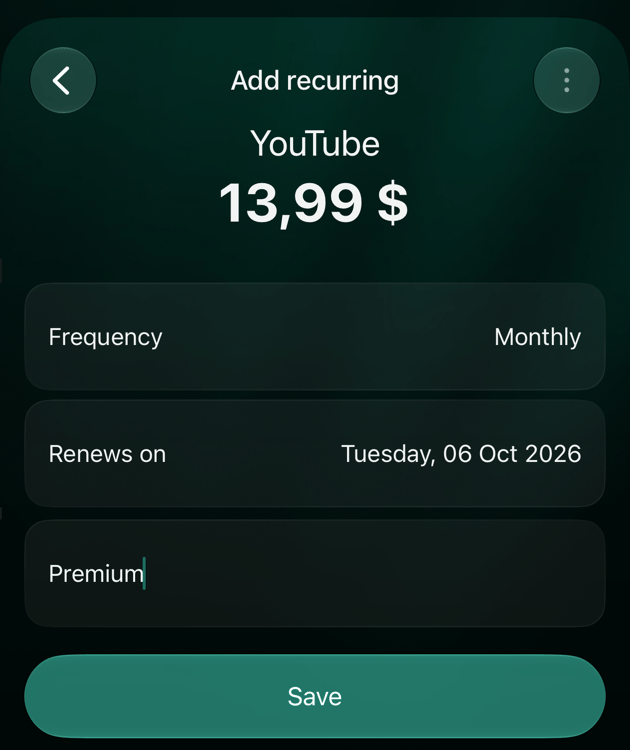
A new recurring payment before saving.
After you save, the merchant, currency, frequency and date can’t be changed. On the web and iOS only the note can change; on Android, the amount and the note. To change anything else, delete the recurring payment and add it again.
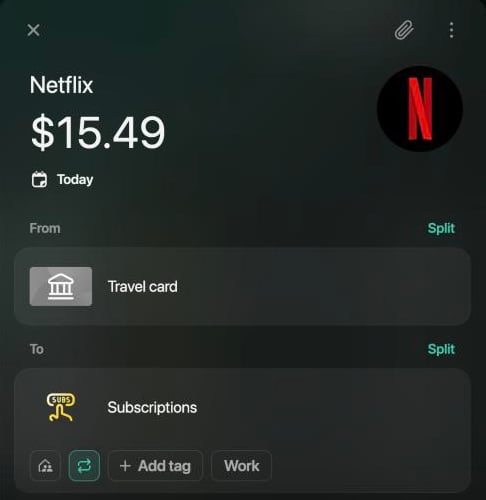
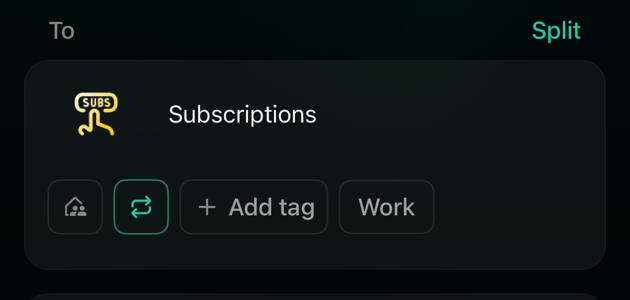
When you save a transaction, finerd links it to a recurring payment if it’s an expense to the same merchant, in the same currency, with an amount and date close to the expected ones. For a recurring payment you added yourself, the match must be exact: the same amount on the expected date. A linked payment marks that period as paid. If a payment isn’t linked, for example because the price changed or the payment came late, link it yourself.Under each category of a transaction there’s a recurring icon (two arrows). It’s highlighted when that part of the transaction is linked. On the web its name is Recurring or Mark as recurring; Android shows the icon without a name. On Android and iOS the icon appears only in a Personal space.
Web
Android
iOS
From a transaction
Open the transaction.
Under the category, select the recurring icon.
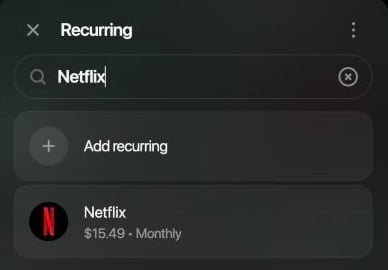
Choose the recurring payment, or Add recurring to create one from this transaction.
Select Save.
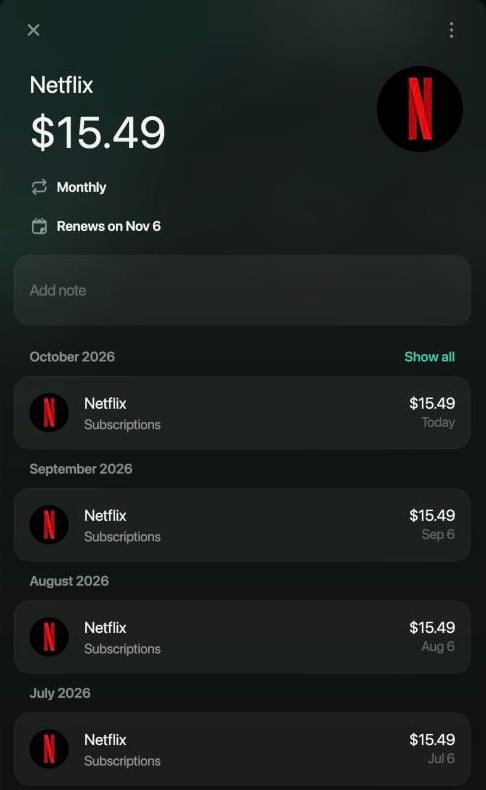
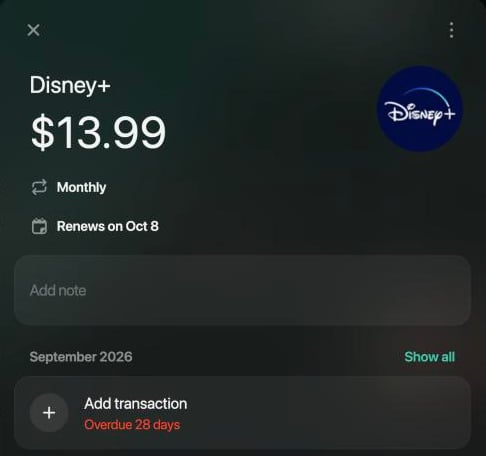
To unlink a payment, select the highlighted icon and save.From a recurring paymentA missed period shows Add transaction with how many days it’s overdue or when it’s due. Select it: a new transaction opens with the merchant, amount and date filled in and already linked. Choose the category and select Save. Show all opens Transactions with every linked payment.
The highlighted icon means the payment is linked.
Choose the recurring payment to link.
From a transaction
Open the transaction.
Under the category, tap the recurring icon.
Choose the recurring payment, or Add recurring to create one from this transaction.
Tap Save.
Tapping the highlighted icon unlinks the payment.From a recurring paymentA missed period shows Add transaction. Tap it: a new transaction opens already linked. Choose the category and account, then tap Save. Show all opens Transactions with every linked payment.
From a transaction
Open the transaction.
Under the category, tap the recurring icon.
Choose the recurring payment.
Tap Save.
Tapping the highlighted icon unlinks the payment.From a recurring paymentA missed period shows Add transaction with Overdue …, Pay today or Pay in …. Tap it: a new transaction opens already linked. Show all opens Transactions with every linked payment.
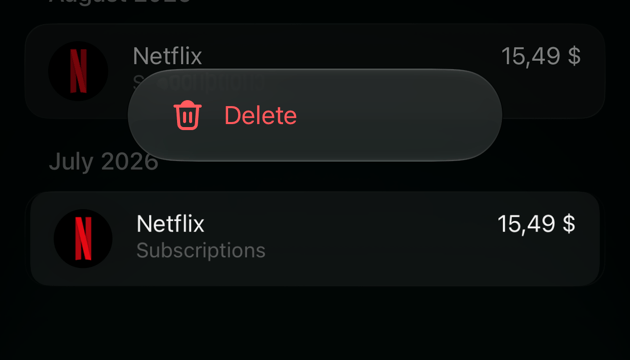
Long-pressing a payment in a recurring payment’s list shows only Delete. It deletes the transaction itself, not just the link.
The highlighted icon means the payment is linked.
A long press shows only Delete.
In a recurring payment, payments are grouped by period, and each goes to the expected date nearest to it. A monthly payment is the exception: it counts for its accrual month, which appears under the category as Accrual month when it differs from the payment’s date. If a monthly payment appears under the wrong month, check its accrual month: see Change or undo a split for Change accrual month.
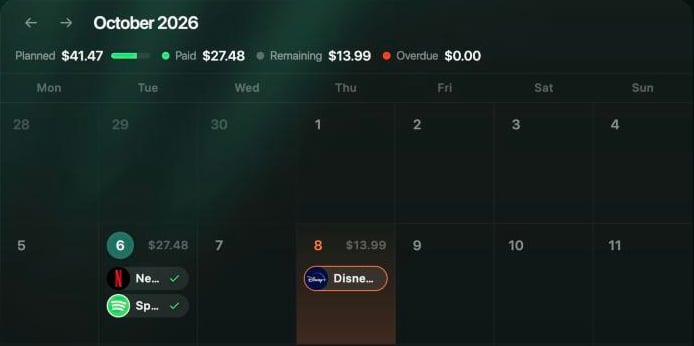
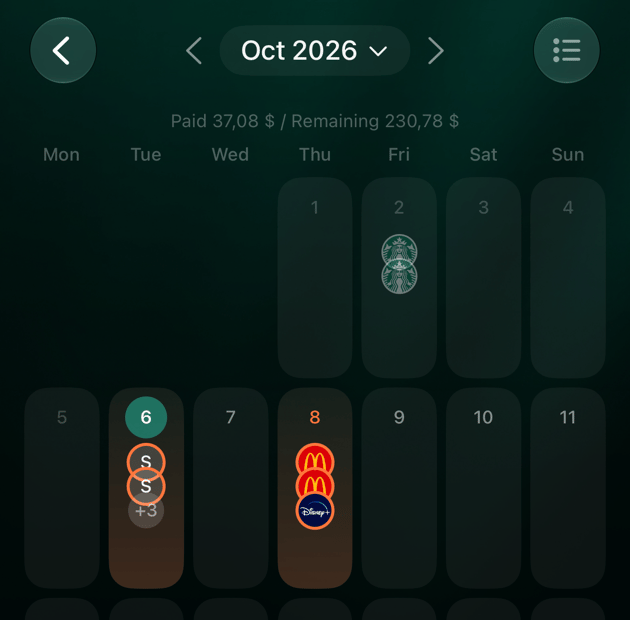
The list shows each recurring payment’s next payment date. To see a month at a glance, switch to the calendar with the calendar icon at the top. The calendar shows Confirmed and Detected payments, not cancelled ones.
What you see
What it means
A check mark next to the merchant
finerd found the payment for that date: it’s paid
Red day (Overdue N days)
The date has passed and no payment is linked
Orange day (Due today, Pay today, Due in N days, Pay in N days)
The payment is due today or within 3 days
No color
An upcoming payment
Overdue means finerd hasn’t found the payment, not that you missed it. If you paid, link the payment or add it.
Web
Android
iOS
Above the calendar, Planned shows the month’s total, split into Paid, Remaining and Overdue, in your primary currency. Use the arrows to change month and Today to come back. Select a payment in a day to open it.
October with two paid payments and one due in 2 days.
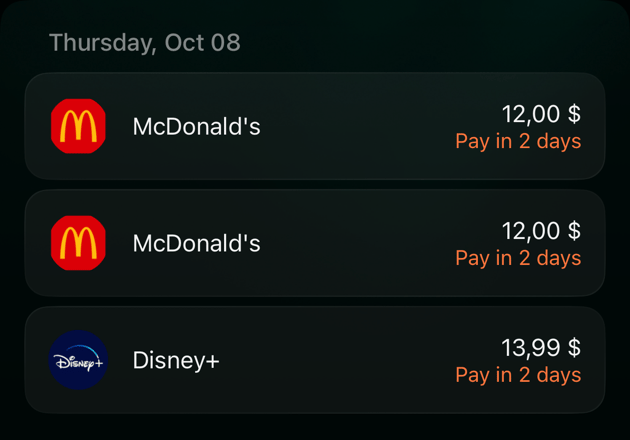
Swipe left or right to change month. Tap a day to see its payments with Overdue N days, Pay today or Pay in N days; a paid one shows only the amount. Tap a payment to open it.
At the top, Paid and Remaining show the month’s totals in your primary currency. Swipe left or right to change month. Tap a day to see its payments: a paid one shows only the amount, others show Overdue N days, Pay today or Pay in N days.
The month at a glance.
Tap a day to see what's due.
A missed period stays overdue until a payment is linked.
Two amounts show what a recurring payment costs you:
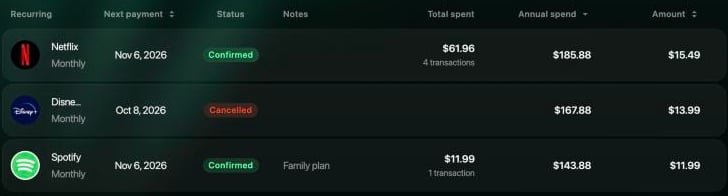
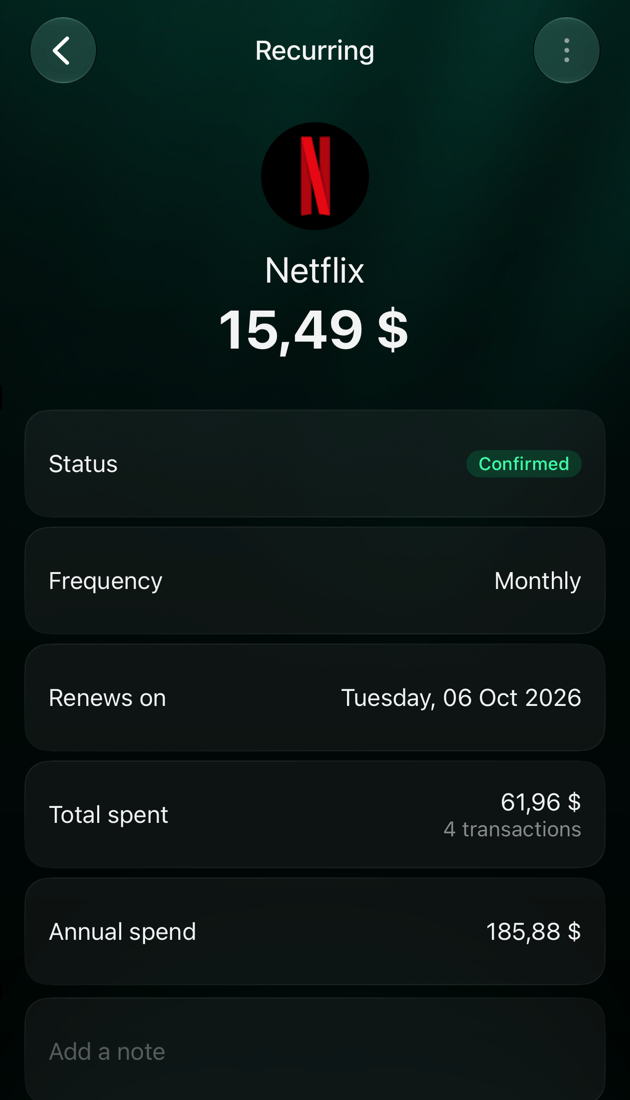
Total spent adds up the payments linked to it and shows how many there are.
Annual spend is the amount times the number of payments in a year, in your primary currency. For Netflix at 15.49amonth,that′s185.88.
The web shows both in the Recurring list and sorts it by Annual spend, highest first. On iOS they’re in the recurring payment’s details. The Android app shows the amount and frequency, without these totals.
Cancelling a recurring payment in finerd doesn’t cancel the subscription itself: do that with the company that charges you.
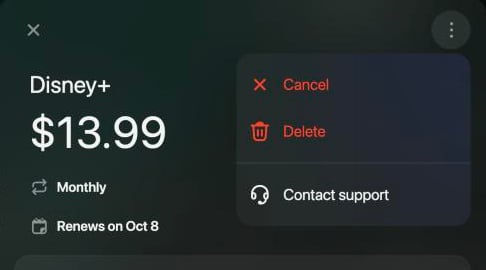
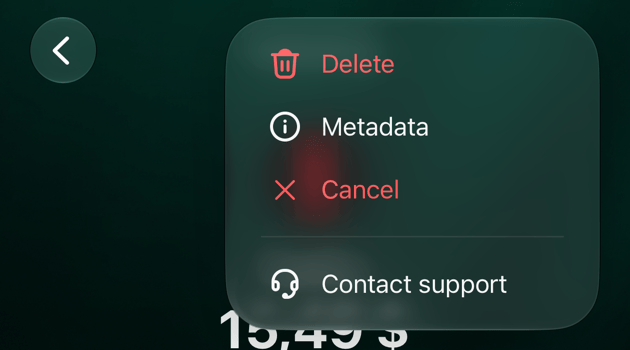
Cancel stops tracking a Confirmed payment: it gets the Cancelled label, leaves the calendar and no new payments are linked to it. Its past payments stay linked.
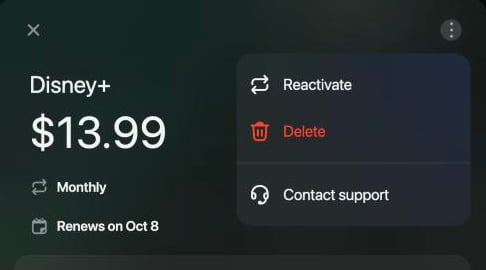
Reactivate makes a cancelled payment Confirmed again.
Delete removes the recurring payment after you confirm. The transactions stay, but they’re no longer linked. A deleted payment can’t be restored.
Cancel and Reactivate happen at once, without a question. A Detected payment can’t be cancelled or deleted: reject it instead. To find a cancelled payment, choose Cancelled in the Status filter of the list.
Web
Android
iOS
In Recurring, select the recurring payment.
Select ⋮ in the top-right corner of the panel.
Select Cancel, Reactivate or Delete. For Delete, confirm with Delete in Delete recurring payment?.
A confirmed payment: Cancel or Delete.
A cancelled payment: Reactivate or Delete.
In Recurring, tap the recurring payment.
Tap ⋮, then Cancel, Reactivate or Delete. For Delete, confirm with Delete.
In Recurring, tap the recurring payment.
Tap ⋮, then Cancel, Reactivate or Delete. For Delete, confirm in Delete recurring payment?.